The future of smart devices is being influenced by edge computing and cloud-based intelligence in changing the way we process, analyse, and respond to data. Edge artificial intelligence (Edge AI) allows for local processing of data directly on the device, which provides quicker response times, reduced latency, and improved privacy as compared to using the cloud to store and analyse data; making it an excellent fit for wearable electronics, autonomous systems, and connected smart homes.
Centralized infrastructure has been used for most of the enterprise's large-scale workloads, including data processing, model training, and keeping models up-to-date. As such, cloud-based processing is appropriate for highly complex, scalable workloads.
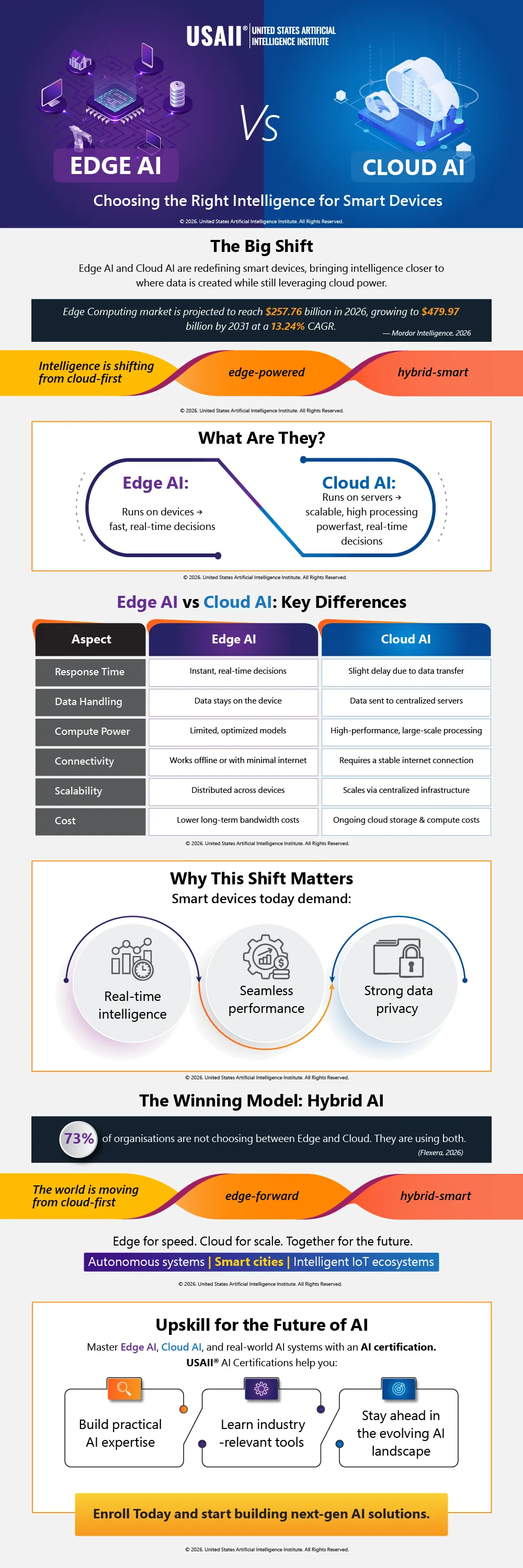
The last few years have seen an acceleration in the shift to distributed intelligence. Based on research conducted by Gartner, the industry expects that 75% of enterprise-generated data will be processed at the edge by 2026. This indicates a clear move away from centralized-only architectures.
The shift towards hybrid edge-cloud AI architecture is primarily being driven by the increasing demand for real-time decision-making, the desire for better data privacy, and lower latency for smart devices. When organisations move to a hybrid edge-cloud architecture, professionals holding a recognised machine learning certification are better positioned to design, deploy, and manage efficient, scalable, and future-ready intelligent systems.
This infographic outlines the main distinctions between Edge AI vs Cloud AI, its advantages, and practical instances, providing insight into how they enable future smart products.