Digital transformation efforts increasingly hinge on a factor many organizations underestimate, the people responsible for adopting the technology, not the technology itself. This is exactly what IBM's 2026 CEO Study confirms directly, with 83% of CEOs stating that AI's success is more reliant on how well their workforce is using the technology than on the tools themselves. That discovery revolutionizes the definition of what true transformation actually means. Change does not just happen with the adoption of new tools; it happens when professionals are able to make those tools a reality in the business. This is where an AI consultant makes its mark for that transformation to happen.
Why Digital Transformation Stalls Without the Right Guidance
For most organizations, finding AI tools they can adopt easily isn't a huge hurdle. The challenge they face is bringing these tools to a business result, training people to get ready for the transition, and keeping the momentum going. There are a number of patterns that tell us why digital transformation stalls without right guidance:
What an AI Consultant Actually Does
The main job of an AI consultant is turning technical AI capability into business decisions that can be taken. The process starts with figuring out where AI can create value in a particular organization and not using a standard approach that applies to all clients. After that, the consultant identifies the use cases to be pursued in the light of their feasibility and impact on business as well as the necessary governance and risk frameworks for deployment to be responsible.
How AI Consultants Drive Digital Transformation
Transforming a business into a different entity is a series of interdependent tasks that tackle different areas where projects typically fall apart.
Not all processes are suitable for AI. A consultant's worth is in knowing what processes can and can't be automated or optimized and in prioritizing them by their business value and feasibility, not by running everything at once that looks like it can be automated.
After priorities are set, a consultant creates a roadmap linking them to long-term goals and makes sure to sequence initiatives strategically, not following the whims of the moment in the realm of AI.
The real benefits of AI are derived from tasks that can be automated and from embedding AI directly into the current processes people are already using, not just adding on as a seemingly independent system that people will eventually ignore.
A common problem that often hinders AI projects is the lack of data readiness. Instead of just integration as an afterthought, consultants evaluate data quality and integrate new systems with existing ones.
Many initiatives leak out of the pilot stage and never get to become part of the entire organization. That transition is directly managed by consultants, who provide support in the process changes involved.
Governance becomes more than a compliance mandate; it becomes a leadership imperative as AI systems make decisions that impact our lives. Governance is not only a matter of compliance, but also a responsibility for leadership, including data privacy, responsible use of AI, and continuous monitoring of performance.
AI Tools and Assets Consultants Use
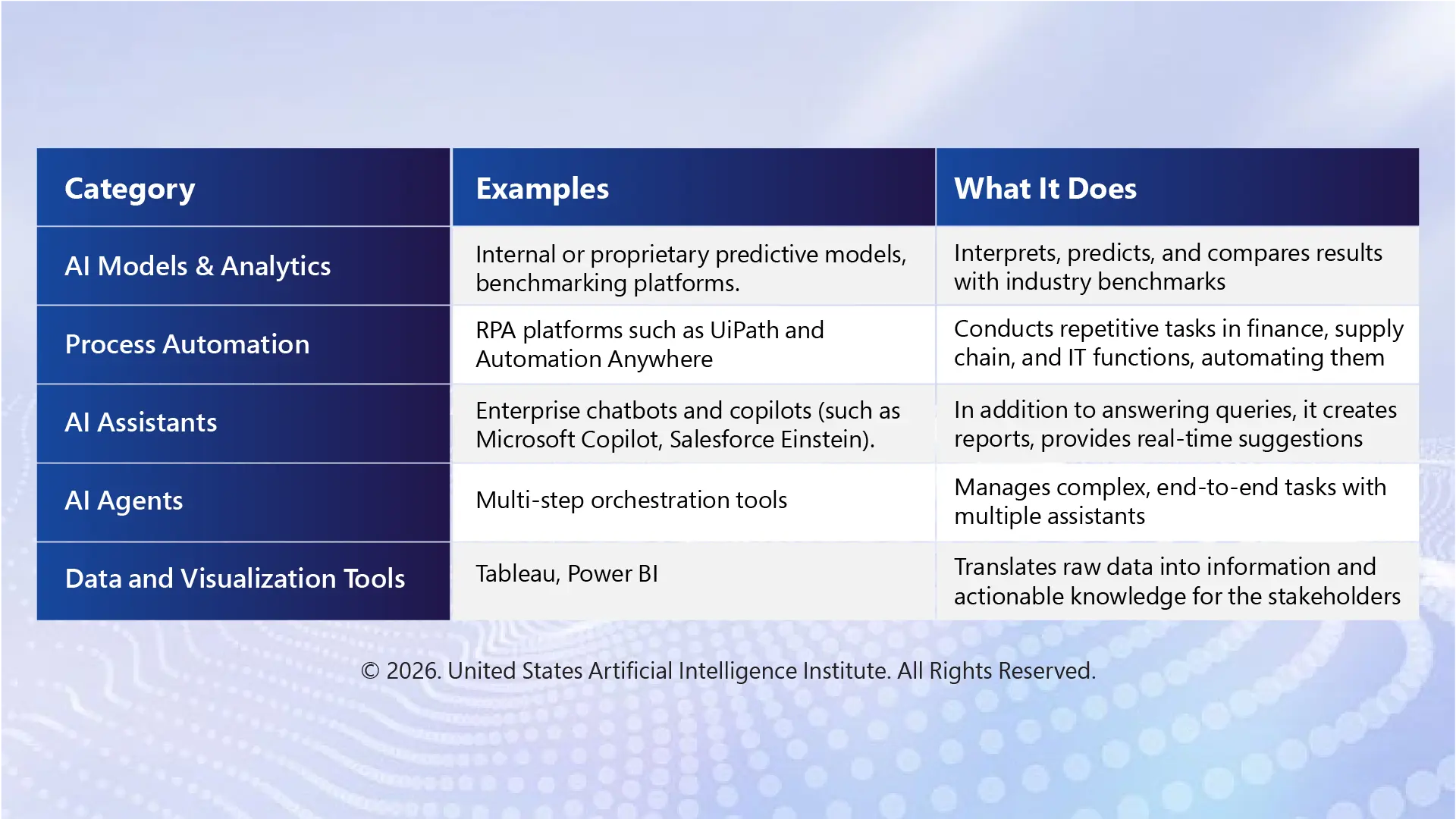
There is no single toolkit of tools for modern AI consulting engagement; there are categories of tools as listed. Consultants are increasingly using these tools to do their job more efficiently while focusing on what a client really needs to attend to for strategic judgment, as opposed to relying solely on manual analysis.
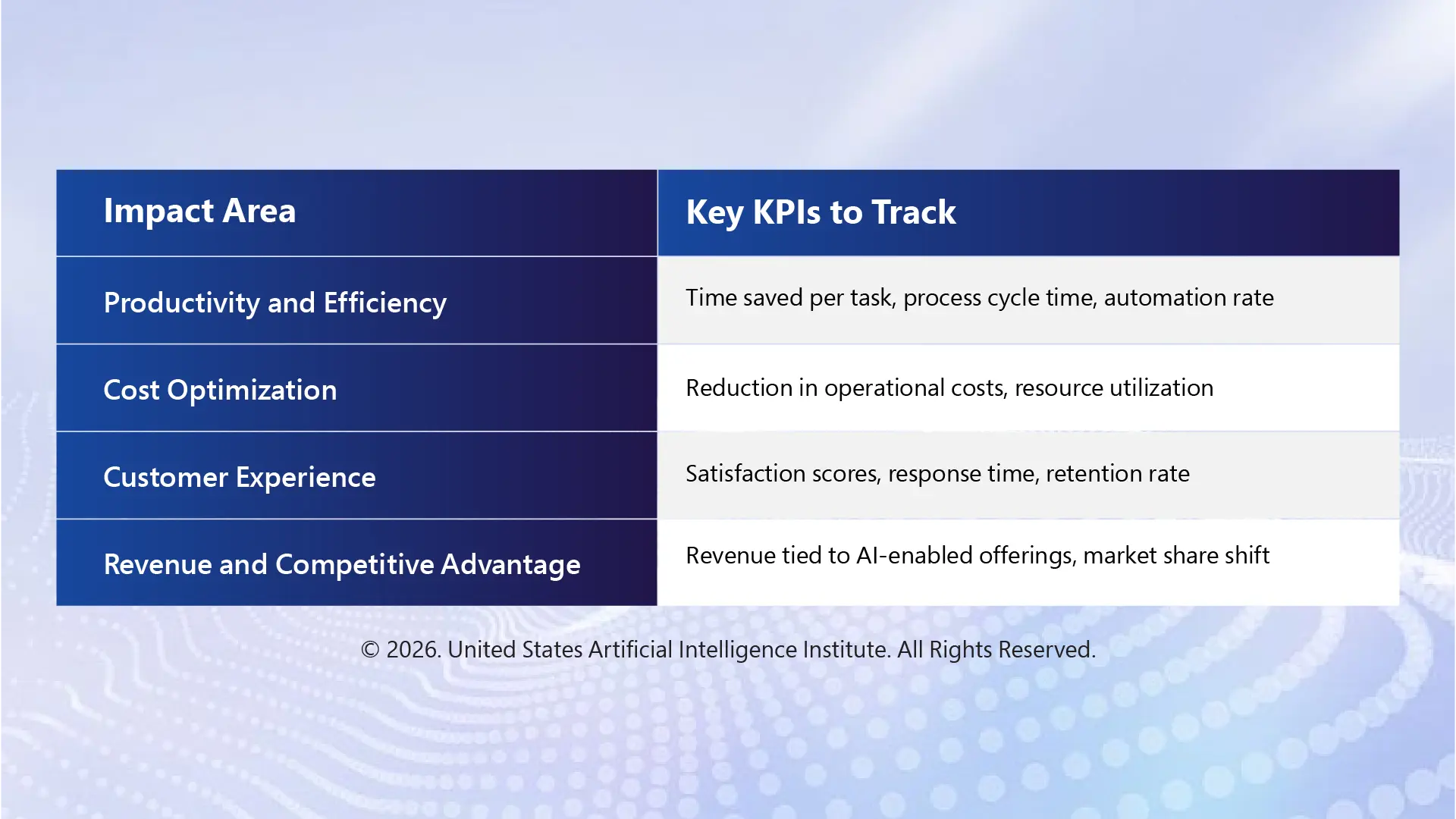
How Do You Measure the Business Impact of AI Transformation?
A transformation effort without clear measurement is difficult to distinguish from one that merely appears active. Consultants track impact across a consistent set of dimensions, using KPIs defined before a project launches rather than justified retroactively.
Key Skills Businesses Should Look for in an AI Consultant
The skills below distinguish consultants who deliver measurable results from those who deliver polished presentations alone.
Building This Capability Through AI Consultant Certification
USAII's Certified Artificial Intelligence Consultant (CAIC™) is built specifically for this role, covering AI and machine learning applications, deployment workflows, and business problem-solving, with specializations in project management, human resources, and product management. It is designed for professionals already several years into their careers, with no programming background required.
For those advancing further, USAII's Certified Artificial Intelligence Scientist (CAIS™) builds deeper technical and strategic capability for senior roles, while the Certified AI Transformation Leader (CAITL™) is built for C-suite executives leading enterprise-wide AI adoption and governance directly.
For a closer look at building this career path over time, USAII's Building a Successful AI Consulting Career in 2026 and Beyond roadmap outlines the skills, positioning, and milestones involved.
Conclusion
As AI capability continues to advance, the role of the AI consultant will only grow more central to how organizations actually capture value from it. The gap between businesses still running disconnected pilots and those seeing measurable results will keep widening, and closing it will depend less on which tools a business adopts than on the judgment, governance discipline, and workforce readiness an AI consultant brings to the table.
Organizations that build this capability early, whether through in-house expertise or the right external partner, will be the ones positioned to turn AI investment into lasting transformation rather than another initiative that quietly stalls.
FAQs
How is an AI consultant different from a traditional management consultant?
An AI consultant combines strategic business judgment with technical fluency in AI systems, a hybrid skill set traditional management consulting does not typically require.
Can an in-house employee take on AI consulting responsibilities, or does it require an external hire?
Both are common; some organizations build this capability internally through certification, while others engage external consultants for specialized work.
Does AI consulting apply only to large enterprises, or can smaller businesses benefit too?
Smaller businesses can benefit as well, often through more targeted, lower-cost engagements focused on a narrow set of high-impact use cases.